
The Saffron Guide
Saffron: grades, quality, flavour and use
Everything you need to choose, judge and cook with the world’s most precious spice — from the people behind Great Taste 2025 two-star saffron.
In short: saffron is the hand-picked, dried stigma of the saffron crocus. The finest grade, Super Negin, contains only the long crimson tips of each stigma, giving the deepest colour, the strongest honeyed aroma and the cleanest flavour. A pinch of 15–20 threads, steeped in warm liquid, is enough to transform a dish for four.
What saffron is
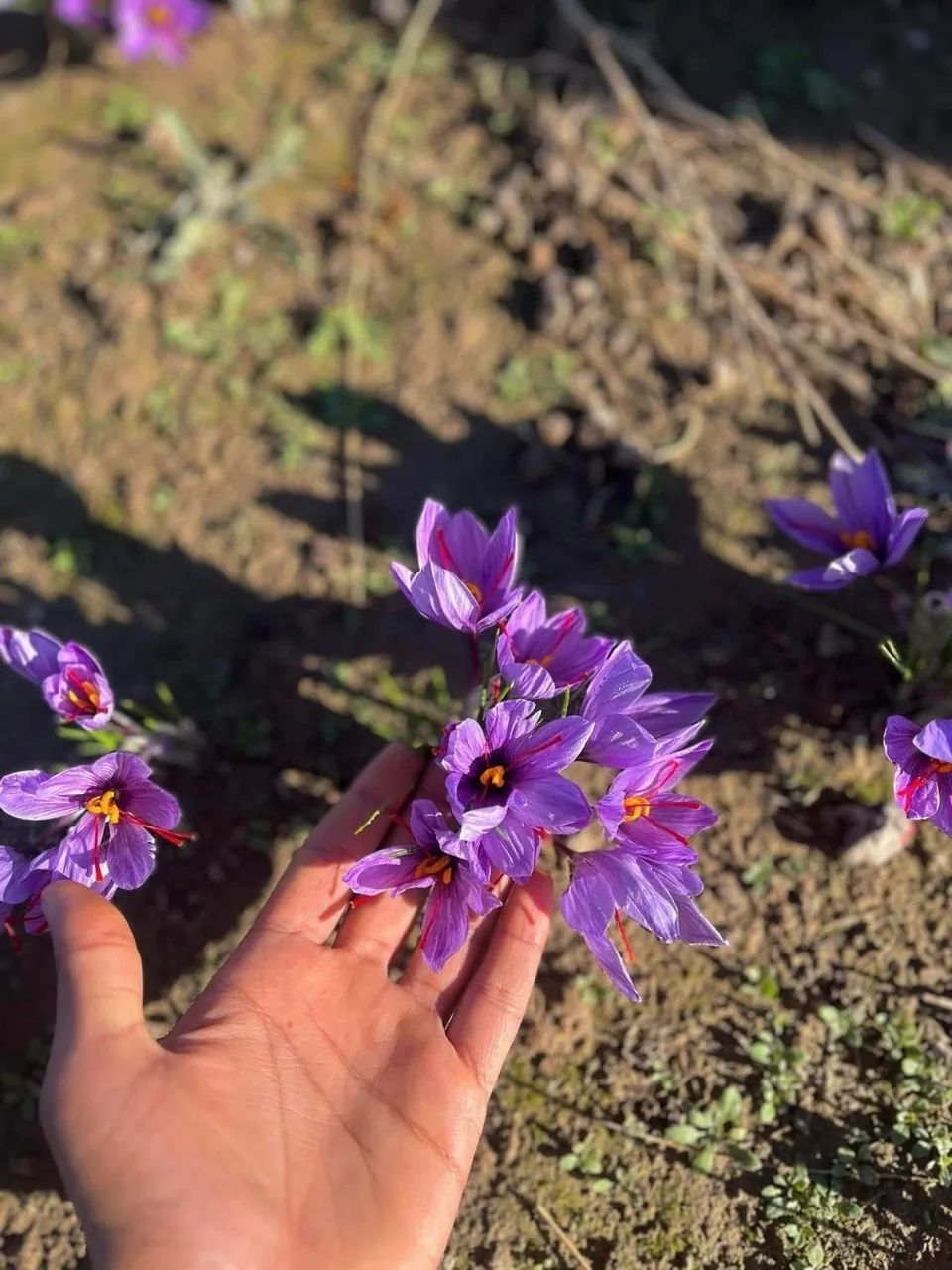
Saffron comes from Crocus sativus, an autumn-flowering crocus with violet petals. At the heart of each flower are three crimson stigmas. Harvesters pick the flowers at dawn, before the sun can dull them, and separate the stigmas by hand. Gently dried, they become the threads we know as saffron.
The numbers explain the price: roughly 150 flowers make one gram, and a skilled picker can process only a few hundred grams of fresh stigmas in a long day. No machine has yet replaced that care.
Saffron’s character comes from three natural compounds: crocin (the golden colour), picrocrocin (the gentle, bittersweet taste) and safranal (the honeyed, hay-like aroma). The higher the grade, the more of each you get in every thread.
How saffron is graded
Saffron is sold in different cuts, depending on how much of the pale style (the stem that joins the stigma to the flower) is left on. The less style, the purer and stronger the saffron.
| Grade | Appearance | Colour & aroma | Best for |
|---|---|---|---|
| Super Negin | Long, thick, straight threads; all-red tips only; no style | Highest | Fine dining, gifting, dishes where saffron is the star |
| Negin | Red tips, slightly less uniform in length | Very high | Everyday luxury cooking |
| Sargol | Red tips only, but shorter and often broken | High | Rice dishes, infusions |
| Pushal | Red stigma with 1–3 mm of yellow style | Moderate | Stews and braises |
| Bunch | Whole stigma with long yellow style, tied in bundles | Lower | Traditional use, where colour matters less |
Every Luxury Tastes saffron is Grade 1 Super Negin. In 2025, Great Taste judges tasted it blind and awarded it two stars — “delicacy balanced with power”. Start with the 3 g jar, or choose the 5 g chef’s jar if you cook with saffron every week.
How to spot genuine saffron
Because it is so valuable, saffron is one of the most imitated foods in the world. These simple checks help you buy with confidence:
- The water test. Drop a few threads into warm water. Genuine saffron releases its colour slowly, turning the water golden-yellow over 10–15 minutes while the threads stay red. Dyed fakes bleed red immediately and the threads turn pale.
- The shape. Each real thread flares into a small trumpet at one end. Uniform, straight-cut strands may be shredded imitations.
- The aroma. Real saffron smells of honey, hay and dried flowers. A dusty or chemical smell is a warning sign.
- The taste. Genuine saffron tastes subtly bitter, never sweet — even though it gives dishes a sweet, floral impression.
- The price and form. Be wary of powders and very low prices. Buying whole threads from a named, traceable brand is the safest choice.
How to use saffron
The secret is to bloom the threads before cooking, which draws out their colour and flavour evenly:
- Lightly crush 15–20 threads (about 0.1 g) with a pinch of sugar or salt in a mortar — our crystal mortar & pestle is made for exactly this.
- Steep in 3–4 tablespoons of warm (not boiling) water, stock or milk for 15–20 minutes.
- Add the golden liquid — threads and all — to your dish towards the end of cooking.
A traditional Persian refinement is to rest the ground saffron over an ice cube and let it melt slowly, which gives an especially vivid, aromatic infusion.
Saffron shines in risotto alla Milanese, paella, biryani, bouillabaisse and Persian rice dishes, and in sweet things too — custards, ice cream, buns, poached pears and saffron tea. See our recipes for ideas.
How to store saffron
Light, heat, air and moisture are saffron’s enemies. Keep it in an airtight container in a cool, dark cupboard — not the fridge, where condensation can form. Stored this way, whole threads keep their best character for around two years. Grind only what you need, just before using it. The metal 10 g gold tin keeps the threads in the dark between uses.
A Persian heritage
Saffron has been cultivated and cherished in Persian culture for millennia — woven into golden rice dishes, rosewater sweets, fragrant teas and the colours of celebration. Luxury Tastes was founded to share that heritage with discerning cooks in Britain and beyond, pairing traditional craft with modern traceability and care.
Frequently asked questions
What is saffron?
Saffron is the dried stigma of the saffron crocus (Crocus sativus). Each flower produces just three crimson stigmas, which are picked by hand and gently dried. It takes roughly 150 flowers to make a single gram, which is why saffron is the most valuable spice in the world by weight.
What is Super Negin saffron?
Super Negin is the highest commercial cut of saffron. Only the long, deep-red tips of the stigma are kept, with no yellow or orange style attached, so the threads are thick, straight and uniform — giving the strongest colour and aroma per gram.
How can I tell if saffron is genuine?
Genuine threads are trumpet-shaped at one end and release their colour slowly into warm water — a gradual golden-yellow, never an instant red. They smell honeyed and hay-like and taste faintly bitter. Powders, uniformly cut threads and unusually low prices are common warning signs.
How much saffron should I use?
Around 0.1 g — roughly 15 to 20 threads — is enough for a risotto, paella or biryani serving four. Lightly crush the threads and steep them in a few tablespoons of warm water, stock or milk for 15 to 20 minutes before adding the liquid to the dish.
How should saffron be stored?
Keep saffron in an airtight container away from light, heat and moisture — a kitchen cupboard is ideal; the fridge is not. Stored well, whole threads keep their best character for around two years.
Why is saffron so expensive?
Because every thread is picked by hand from a flower that blooms for only a few weeks each autumn. Around 150 flowers make one gram, and the finest grades such as Super Negin discard everything but the crimson tips.
Is saffron suitable for vegan and gluten-free diets?
Yes. Pure saffron threads are naturally vegan, vegetarian and gluten-free, with no additives.
Taste the difference
Award-winning Super Negin saffron
From an introductory 1 g gift box to the 10 g gold collector’s tin.