
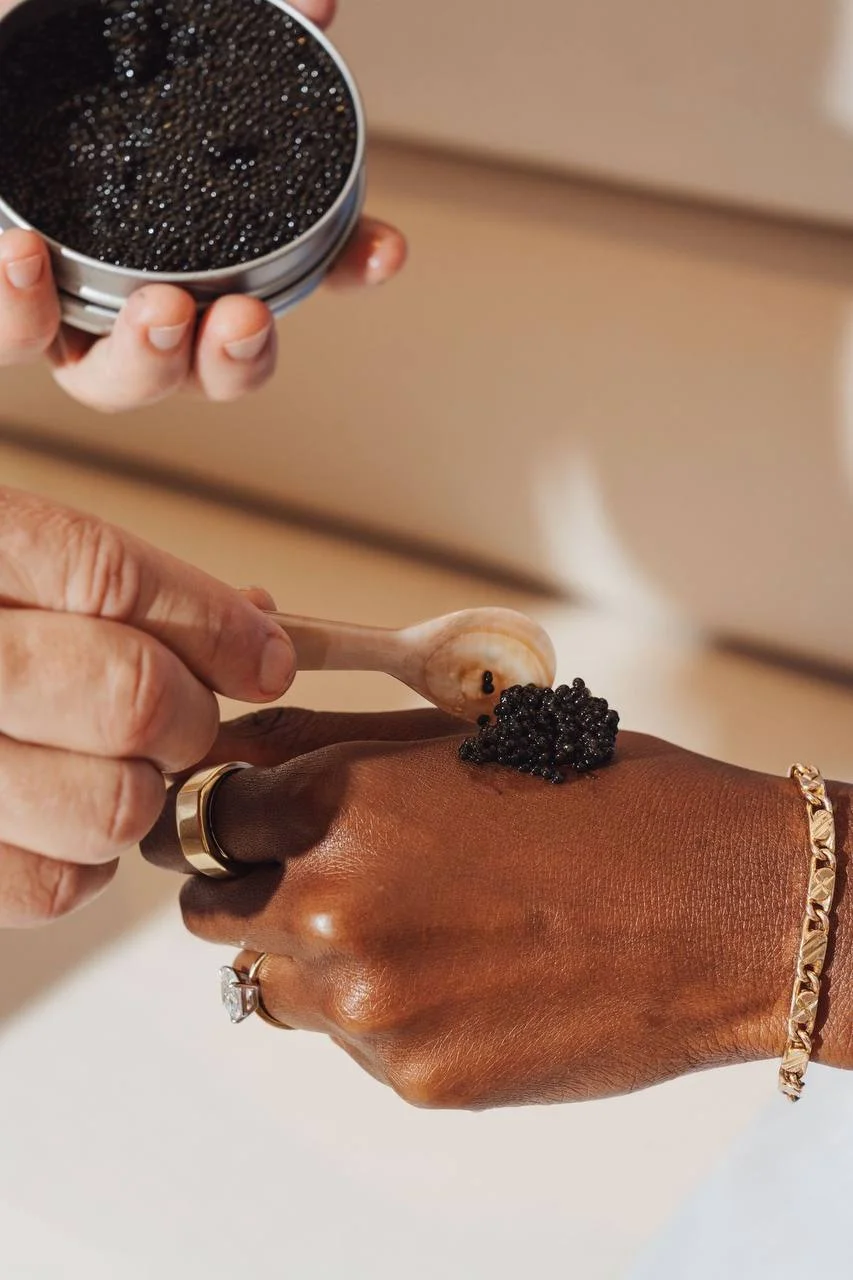
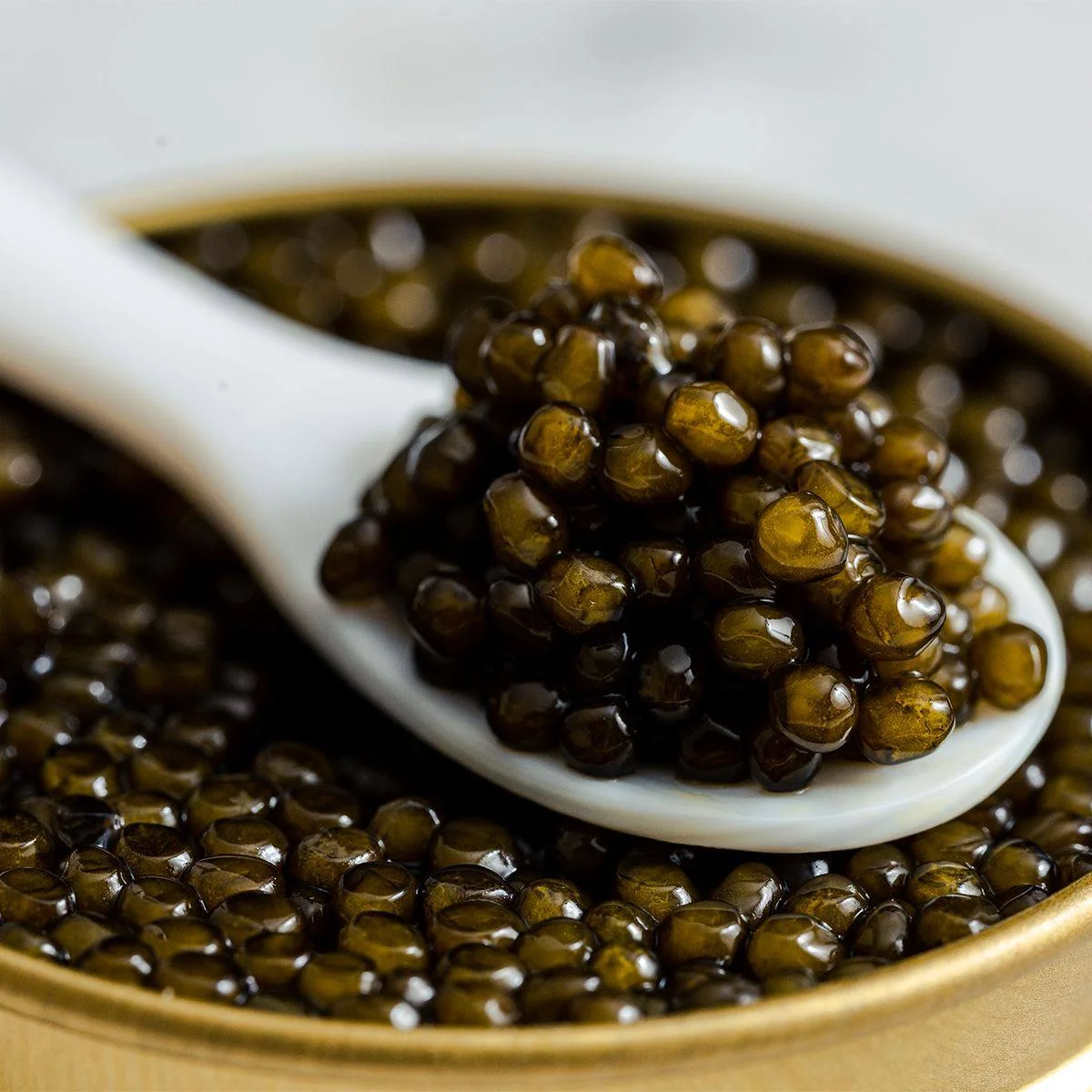
A £200 tin of caviar can be undone by a fifty-pence teaspoon. In fine dining, the final metre of the supply chain — the short journey from tin to palate — is where luxury is either honoured or quietly ruined.
Why Serving Technique Matters as Much as Grade
Connoisseurs devote enormous attention to grade, pearl size and provenance, and rightly so. Yet the world’s finest sturgeon roe is ultimately judged in the mouth, in a window of a few seconds, at a precise temperature, from a specific material. Serving technique is the last metre of provenance: everything a producer has done — the years of careful aquaculture, the cold chain, the grading — converges on how the tin is opened, chilled and offered.
The stakes are rising. According to Mordor Intelligence, the global caviar market is forecast to grow from USD 446.9 million in 2026 to USD 664.3 million by 2031, driven by aquaculture innovation and luxury hospitality demand. More first-time buyers are opening tins at home than at any point in history — and most of them are making the same three mistakes: the wrong spoon, the wrong temperature and the wrong timing.
The Science of the Spoon: Why Mother-of-Pearl, Never Metal
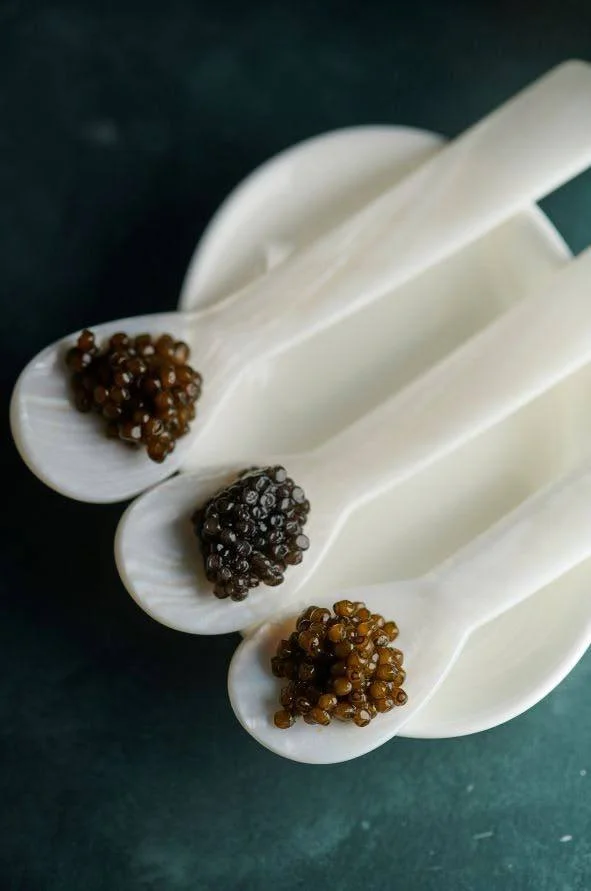
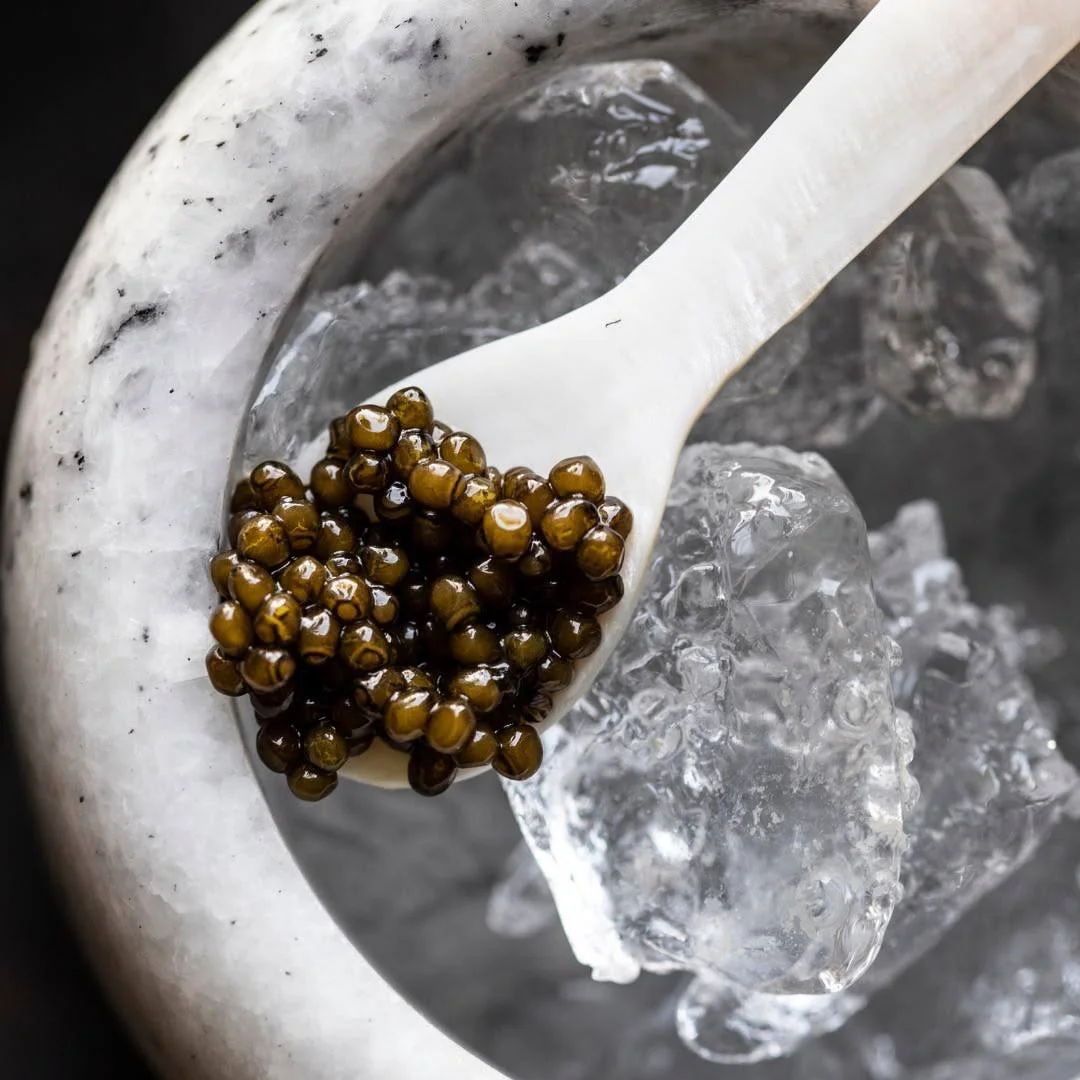
Why should caviar never touch a metal spoon? Stainless steel and silver are chemically reactive: trace metal ions interact with the delicate lipids and salts in sturgeon roe, catalysing oxidation and leaving a bitter, metallic aftertaste that masks the roe’s natural butter-and-brine character. Mother-of-pearl — the nacre lining of oyster and mussel shells — is chemically inert, transfers no flavour, does not conduct heat into the chilled pearls, and has therefore been the standard of formal caviar service for more than two centuries.
What the research actually shows
This is not merely tradition. Researchers at the University of Oxford’s Crossmodal Research Laboratory demonstrated experimentally that the material of cutlery measurably changes taste perception: in Harrar and Spence’s 2013 study “The taste of cutlery”, published in the peer-reviewed journal Flavour, food sampled from different spoon materials and finishes was rated significantly differently for saltiness, pleasantness and perceived quality. For a product whose entire value proposition rests on a fleeting, nuanced flavour profile, the spoon is not an accessory — it is part of the instrument.
Choosing your spoon: the materials compared
Bone and horn are the historic alternatives, and both are inert, though they can absorb aromas over time. Gold is equally non-reactive — the reason Imperial Russian courts favoured it — but is hardly practical. Wood is inert yet porous. Mother-of-pearl remains the reference standard: inert, non-porous, cool to the touch and with an iridescence that flatters the roe. A hand-finished mother-of-pearl caviar spoon costs less than a glass of champagne and will outlast every tin you open with it.
Temperature, Timing and Presentation
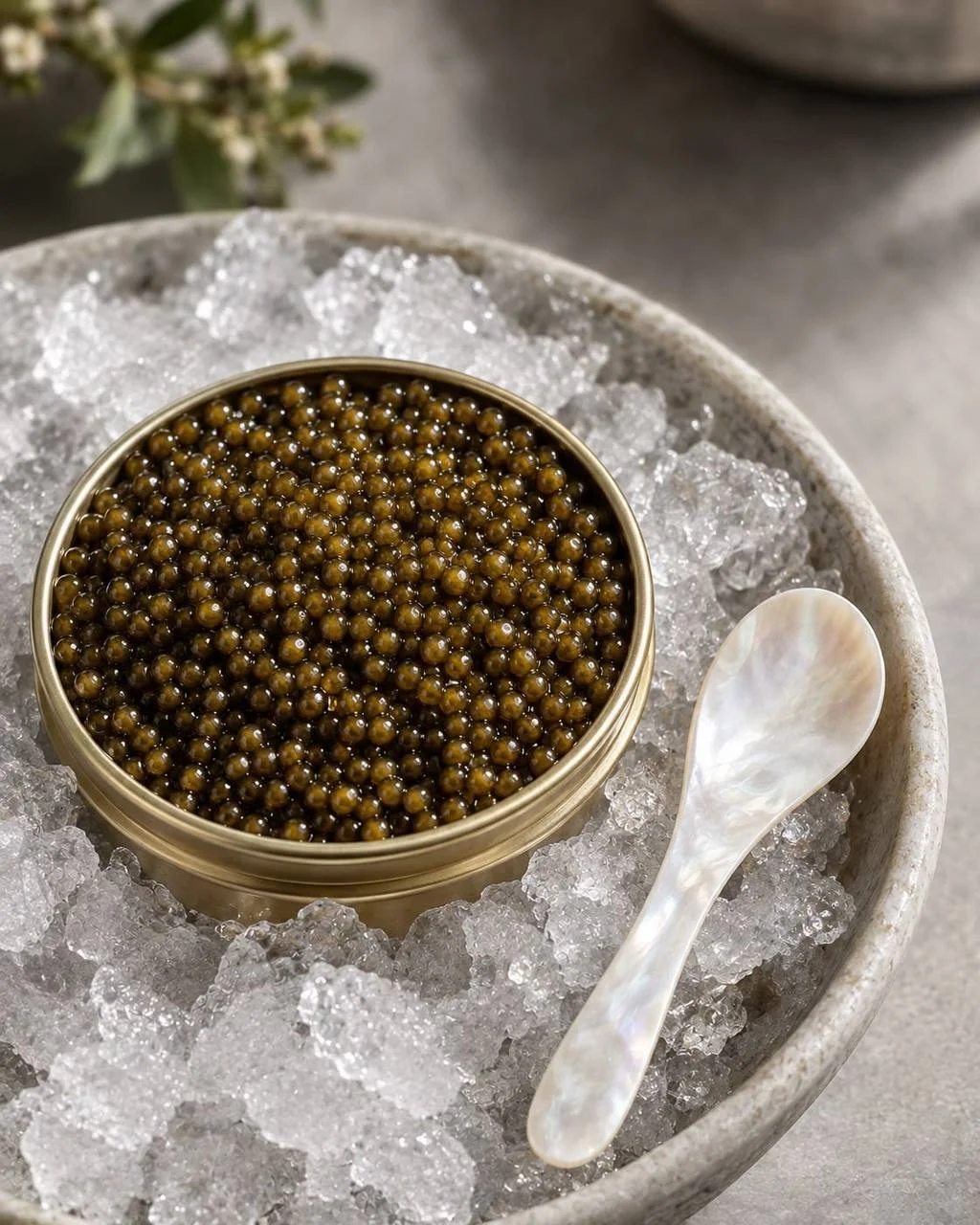
Caviar should be served over crushed ice at 0–4°C and kept in the coldest part of the refrigerator — never the freezer — until moments before service. Freezing ruptures the membrane of each egg and destroys the signature “pop”; excessive warmth softens the pearls and unbalances the salt. Once opened, a tin begins losing textural definition within roughly twenty to thirty minutes at room temperature, which is why professional service is built around a short, deliberate ritual.
The service ritual, step by step
First, chill the unopened tin for at least two hours. Second, prepare a presentation bowl of crushed ice and nest the tin within it, opening the lid only at the table — the quiet release of the seal is part of the theatre. Third, offer each guest their own mother-of-pearl spoon and let them draw gently across the surface rather than digging, which crushes the pearls below. Finally, serve the accompaniments separately, never spooned over the roe. Nothing about this takes skill; all of it takes intention.
Storing an opened tin
An opened tin is a countdown. Press a piece of cling film directly onto the surface of the remaining roe to exclude air, reseal the lid, and return it to the coldest shelf of the refrigerator — ideally between 0 and 2°C. Consumed within two to three days, well-kept roe loses remarkably little; beyond that, oxidation flattens the high notes first, then the texture follows. The disciplined answer, of course, is to buy the tin size that matches the occasion rather than storing at all — a 30-gram tin finished at its peak is worth more than a 125-gram tin nursed for a week.
Portions, Pairings and the Palate
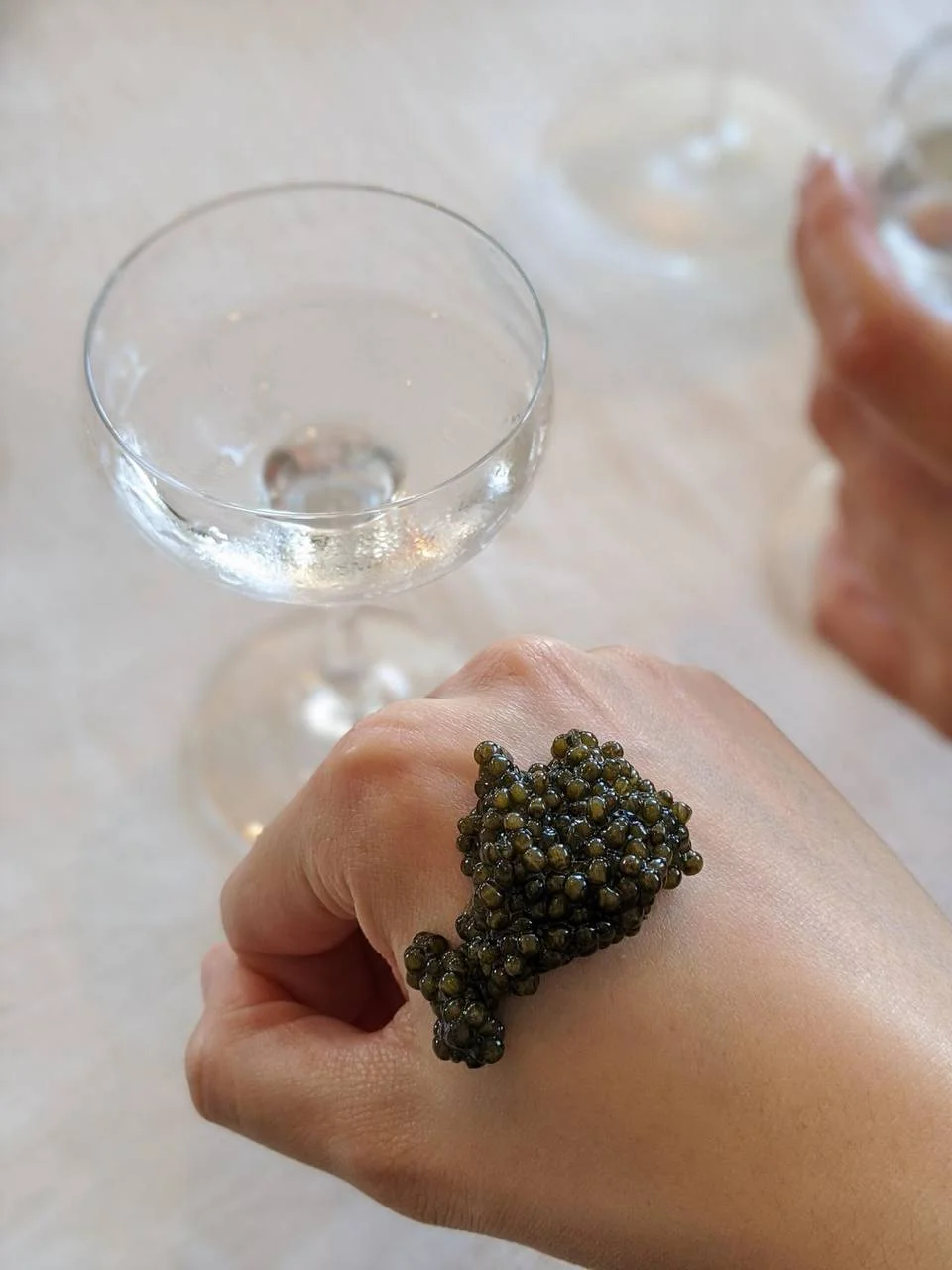
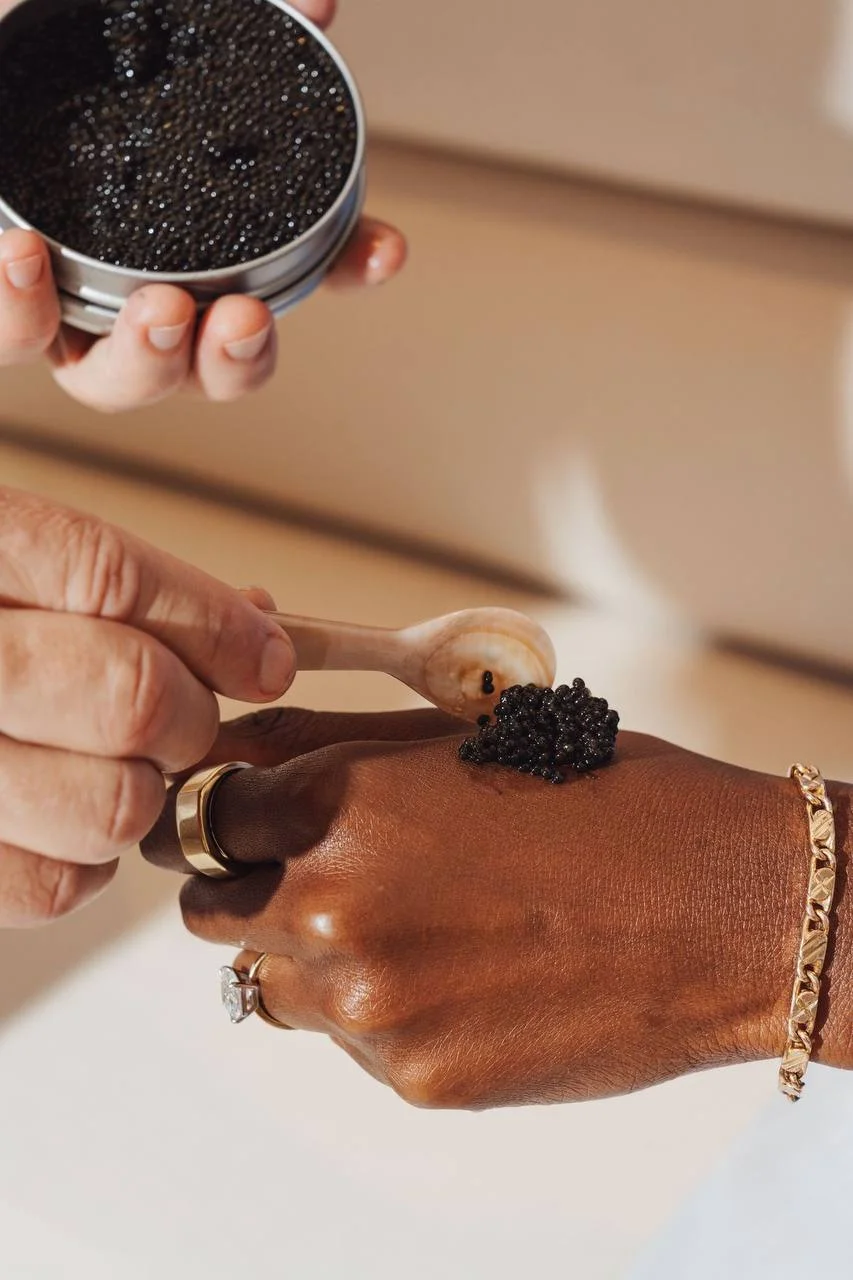
A considered tasting portion is three to five grams per person — a rounded half-teaspoon — rising to ten or fifteen grams for a generous course. The first taste should always be unadorned: place the pearls on the back of the hand between thumb and forefinger, where the skin’s warmth lifts the aroma, and let the roe speak first.
Thereafter, the classic accompaniments exist to frame rather than compete: warm blinis, crème fraîche, steamed new potatoes, lightly buttered toast points. For a distinctly modern table, a saffron beurre blanc or saffron-infused blini — made with a few threads of Grade 1 Super Negin saffron — pairs the world’s two most precious ingredients without overwhelming either: the honeyed, floral depth of true saffron against the clean brine of the roe. Champagne, a taut blanc de blancs or well-chilled vodka completes the trinity.
Just as important is what to leave off the table. Raw onion, capers and lemon wedges — the delicatessen clichés of the twentieth century — were devised to disguise inferior or over-salted roe, not to honour a fine one. Strongly flavoured crackers, smoked garnishes and anything acidic enough to denature the pearls belong to a different era. If a garnish would overpower a fresh oyster, it will overpower good caviar. The better the tin, the barer the table should be.
Provenance and the Modern Caviar Table
The final element of correct service is knowing precisely what you are serving. In 2026, traceability is the new vintage: discerning buyers expect to know the species, the farm, the harvest method and the cold chain behind every tin. Modern closed-loop aquaculture — recirculating systems that regulate water temperature, oxygen and mineral balance with engineering precision — now produces roe that rivals and often surpasses historic wild harvests, while protecting endangered sturgeon populations. Serving caviar well therefore begins long before the ice bowl: it begins with choosing a supplier who can document every step.
The industry’s direction of travel reinforces the point. Non-lethal harvesting techniques are gaining ground, allowing multiple harvest cycles from the same fish and improving long-term supply stability; real-time monitoring now governs water quality, feeding cycles and harvest timing on the leading farms. The connoisseur who asks about harvest method and farm certification is no longer being difficult — they are simply serving caviar correctly, from the very first question.
That philosophy — full traceability, sustainable sourcing and uncompromising grading — is the foundation of the Luxury Tastes collection and of everything we curate, from rare mineral salts to award-winning saffron.
The Ritual Is the Luxury
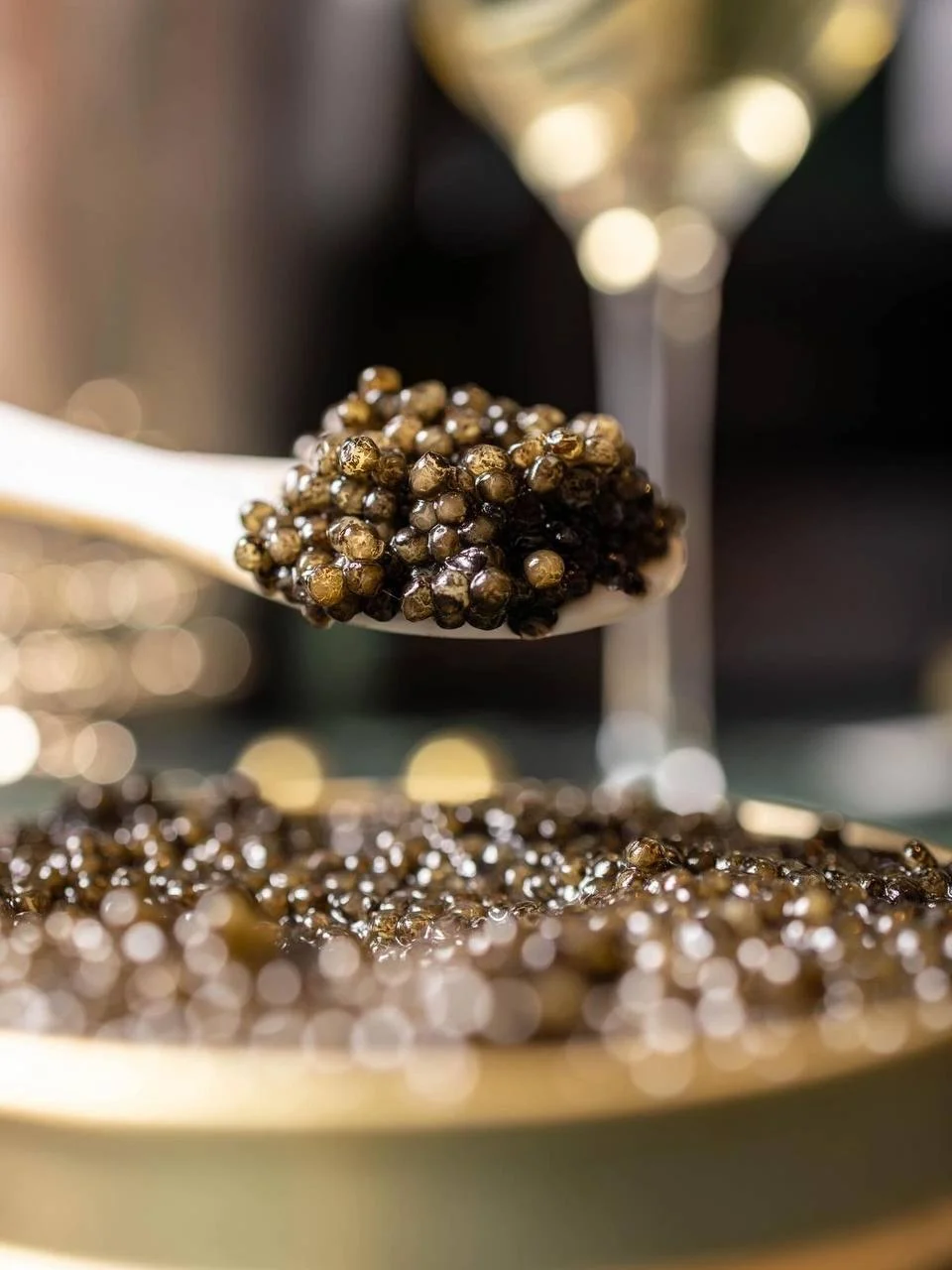
Perfect caviar service is a supply chain honoured at the table: the right provenance, the right temperature, the right material, the right moment. Master those four points and a single tin becomes an occasion. Explore our caviar accessories and the full collection of the world’s most exclusive ingredients at www.luxurytastes.com — and serve the extraordinary as it deserves.